As the vibrant blooms of spring settle into the Sacramento Valley, homeowners often find themselves at a crossroads regarding spring tree care. While the rainy season feels like a recent memory, the rising temperatures in Elk Grove, Vineyard, and Florin mark a critical physiological shift for your canopy
At Golden Roots Tree Care, we believe that true hydration goes beyond surface-level moisture. As an ISA Certified Arborist-led team, we focus on the science of tree health to ensure your landscape thrives through the transition into summer
The Science of April: Transpiration and the Central Valley
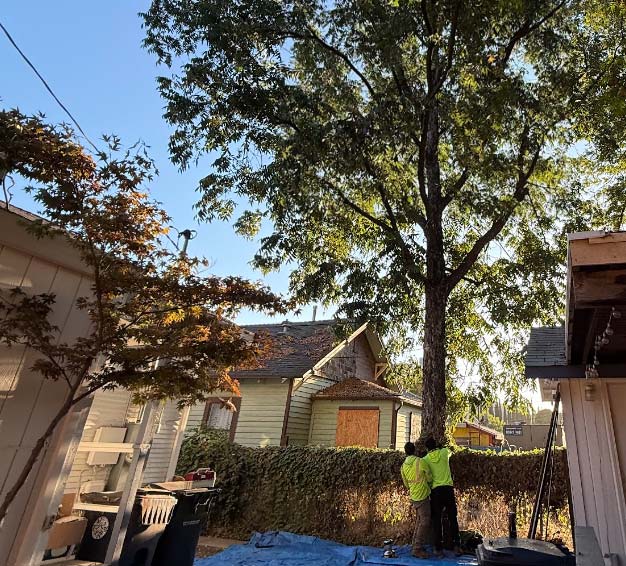
In April, Sacramento trees exit dormancy and begin a period of rapid growth. This process is driven by transpiration—essentially how a tree “breathes” and moves water from its roots to its leaves.
As the sun grows stronger, the rate of transpiration increases. Even if the soil feels damp to the touch, the tree may be losing water faster than it can absorb it. This is why a simple “wet vs. dry” test is often insufficient. Without proper
The “Deep Root” Method vs. Surface Watering
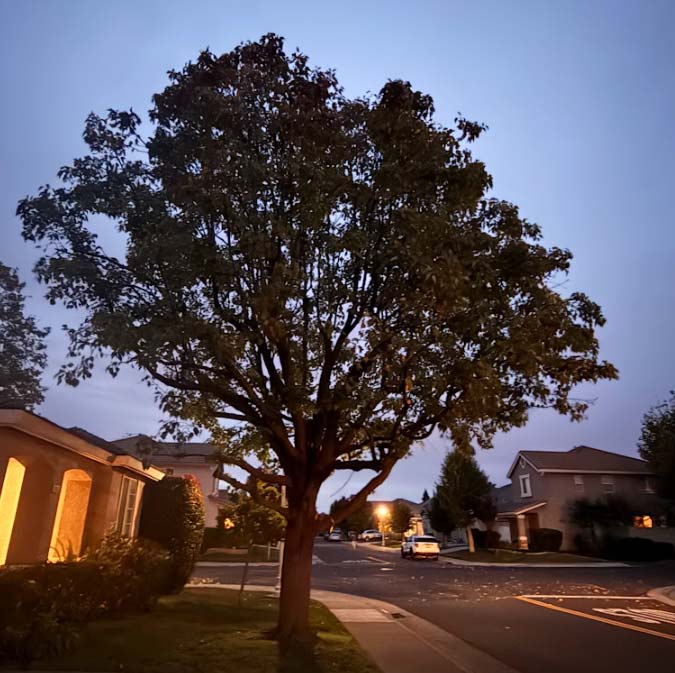
Many homeowners make the mistake of frequent, shallow watering. This encourages roots to stay near the surface, making them vulnerable to heat and physical damage.
Why Deep Saturation Matters
-
Encourages Stability: Deep watering forces roots to grow downward, anchoring the tree firmly
. -
Drought Resistance: Deeper soil stays cooler and retains moisture longer than the surface
. -
Prevents Root Damage: Surface-level roots are more likely to interfere with landscaping or require
stump grinding .
Based on Sacramento’s clay-heavy soil, we recommend slow, deep saturation that reaches 12 to 18 inches below the surface to ensure the entire root ball is hydrated.
Species Specifics: Young Saplings vs. Mature Oaks
Not all trees in your yard share the same thirst.
-
Young Trees (1–3 years): These require more frequent attention as their root systems are still establishing. They generally need 10–15 gallons of water twice a week in April
. -
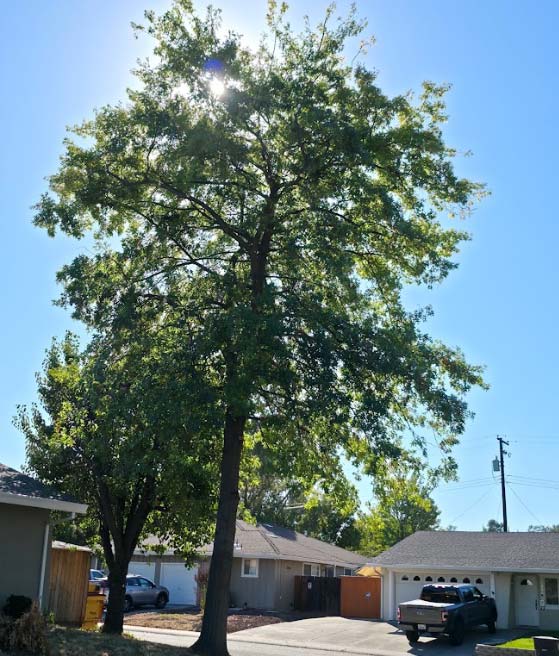
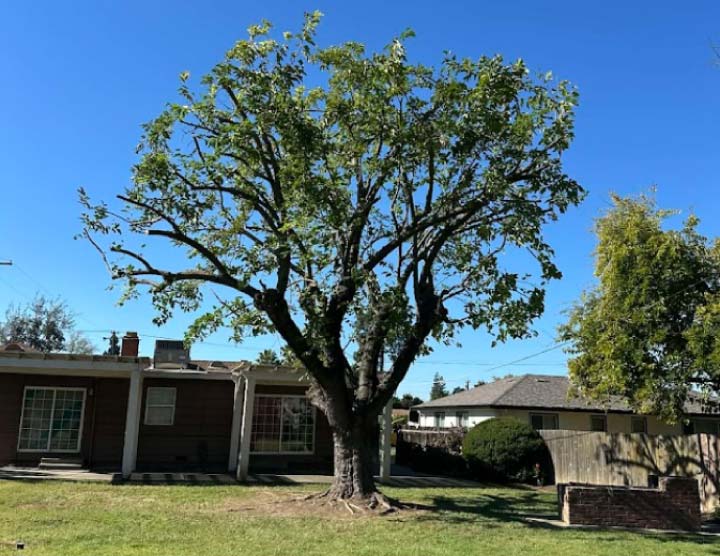
Mature Oaks: Established valley oaks are sensitive to “wet feet.” Overwatering the area near the trunk can lead to fungal diseases. If a mature tree shows significant decay or becomes a hazard, a professional
tree removal .
Warning Signs: When to Call a Professional
Distinguishing between a thirsty tree and a diseased one can be difficult. You should contact an arborist if you notice:
- Wilting or Curling Leaves: A classic sign of water stress
. - Yellowing Inner Foliage: Can indicate overwatering or poor drainage
. - Fungal Growth at the Base: A sign of excessive moisture and potential root rot
.

About Golden Roots Tree Care
Golden Roots Tree Care is a family-owned and operated business founded in 2021 by Lorenzo Sanchez Perez
We aren’t just a “cutting” service; we are dedicated to the long-term care and preservation of Sacramento’s urban forest
Protect Your Landscape Today
Don’t wait for the summer heat to stress your trees. Ensure your canopy is prepared with a professional health assessment from Golden Roots Tree Care.
Contact us today at (916) 707-7100 to schedule your consultation with an ISA Certified Arborist.
Frequently Asked Questions (FAQs)
How often should I water trees in spring?
Generally, once a week is sufficient if there is no rain, but you must check the soil depth moisture rather than just the surface.
Can you overwater a tree in April?
Yes. Excessive moisture can drown roots by cutting off oxygen, especially in Sacramento’s heavy soils.
How do I know if my tree needs deep root watering?
If the soil is hard-packed or if the tree shows signs of leaf scorch despite surface watering, it likely needs a deeper soak.
Does mulch help with April watering?
Absolutely. A 2-to-4-inch layer of organic mulch helps retain soil moisture and regulates temperature.
Should I fertilize while watering in April?
It depends on the tree’s health. Consult an arborist to ensure you aren’t forcing growth that the tree’s current water intake cannot support.
